Maps, Findings, and Field Results
Research Reports You Can Read
Revolutionary-era Lowcountry Sites
Explore Jasper County’s archaeological work at Coosawhatchie, Old House, and Purrysburg, then read the public reports to see what researchers found.

Battle of Coosawhatchie, SC
Coosawhatchie: A Skirmish Site Hidden by Modern Change
The Battle of Coosawhatchie (May 3, 1779) took place at or near today’s modern village, where later development makes archaeological confirmation difficult.
What Researchers Did and What It Means
- Historic sources and maps place 18th-century Coosawhatchie in the same footprint as the modern community—an “unfortunate” reality for finding intact battlefield evidence.
- A metal-detector survey tested multiple areas, including a ridge line search area, without recovering Revolutionary War artifacts during the limited field effort.
- The report recommends future effort along the ridgeline north of Coosawhatchie near Tullifinny Hill, where General Moultrie camped, as a potentially stronger “next stop.”
Read the Coosawhatchie & Fort Balfour Findings Report
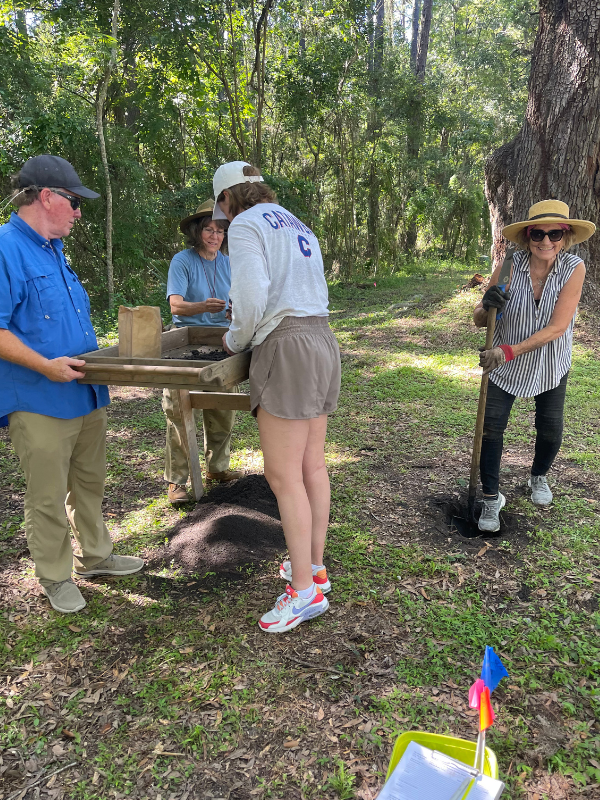
Archaeology Dig
Old House: A Plantation Landscape on High Ground and a Working Marsh
Old House isn’t just a homeplace—it’s a whole working landscape. In 1996, archaeological investigations mapped and tested the site, then documented extensive marsh features, expanding what we know about Lowcountry plantation life and labor.
What researchers documented
- A network of plank roads in the marsh (including a main road described as about 40 feet wide and traceable by probing for at least 200 feet).
- A filled canal, multiple structures and pilings, and evidence tied to rice operations—including a buried wooden trunk, gate supports, and a fragment of a millstone.
- A tidal rice mill complex described as a major feature on the creek edge, including measurements for the mill structure and associated components like the trunk and gate supports.
Tital Archaeology Dig in Action at Old House
Tidal Archaeology in Action at Old House Plantation
Dr. Lynn Harris is on-site at Old House Plantation with a staff and crew of eight graduate students from the Program of Maritime Studies at East Carolina University.
Working with the Jasper County 250 Committee and the LAMAR Institute, the team is conducting tidal and marsh archaeology to document and uncover Revolutionary War history at this significant Lowcountry site.
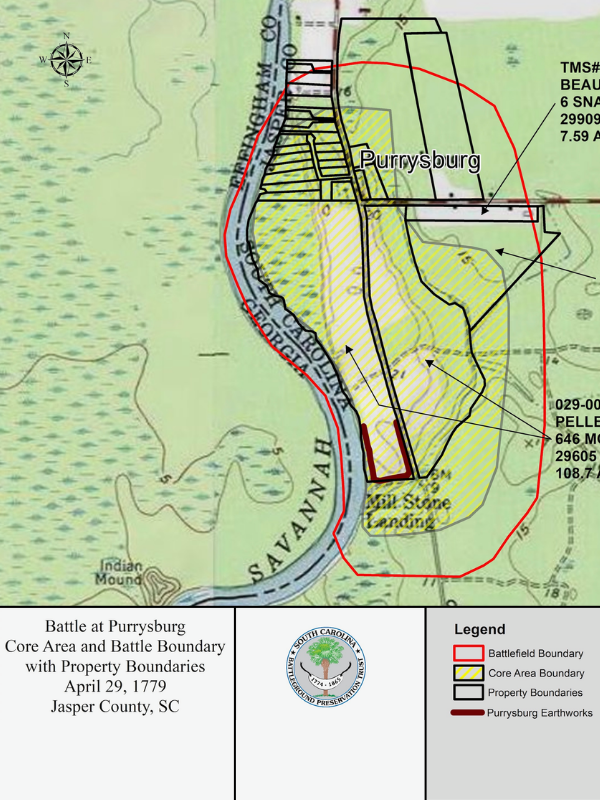
Purrysburg Battle Site Map
Purrysburg: A Battlefield Within a Town. Evidence That Still Survives
The Revolutionary War landscape at Purrysburg is a place where research helps the community see what happened—and where. The survey results allow a preliminary definition of the battle’s “Core Area”, showing where the primary action on April 29, 1779 most likely occurred.
What the Survey Confirmed
- The report presents a Core Area of the battlefield (mapped against a historic plan of Purysburg), indicating the primary fight was not in northern Purysburg or farther ferry vicinities.
- The work includes a commitment to public communication—providing public-facing versions of findings and sharing results through meetings and presentations.
On-the-Ground Battlefield Features
The report documents battlefield loci and features, including:
- a suspected fort area with lead balls and case shot, suggesting artillery use in the April 29 invasion.
- And an entrenchment area with berms and trenches, plus nearby bomb shell fragments, possibly associated with artillery activity
Learn more. Read deeper. Share the story.
These sites connect Jasper County to the Revolutionary-era Lowcountry in a way that’s grounded in evidence, mapped in detail, and shared publicly. If you want the full story, start with the reports, then visit and experience the landscape with new eyes.

Visiting Our Historic Sites Is Easy
Plan Your Trip Today: Start planning your visit to our historic sites.
Explore Our Locations: Discover the rich history at each of our sites.
Experience the Lowcountry: Enjoy a memorable visit in all our natural beauty.
Come Visit Us
Discover Jasper County’s rich Revolutionary War history today.
What Visitors Are Saying...
Our Proud Partners







Come Visit Us
Discover Jasper County’s rich Revolutionary War history today.